How Much Does a Food Dehydrator Cost?
Most food dehydrators fall into budget, mid-range and premium tiers, and the price tracks tray count, material and controls more than brand. A basic plastic model costs the least, while stainless steel units with many trays and presets sit at the top.
On this page (8 sections)
- What decides the price of a food dehydrator?
- What does a budget food dehydrator cost and what do you get?
- What does a mid-range food dehydrator cost and what changes?
- What does a premium food dehydrator cost and who needs one?
- How much does a food dehydrator cost to run?
- Why do two dehydrators with the same tray count cost different amounts?
- How do you match a budget to what you'll actually dry?
- How much does a food dehydrator cost overall?
A food dehydrator costs more or less depending on three things: how many trays it has, what it's made of, and how much control you get over temperature and time. A basic plastic model sits at the low end, and a stainless steel unit with many trays and presets sits at the top.
That means there's no single price for "a food dehydrator." The same question about how much does a food dehydrator cost gets a different answer for someone drying a handful of herbs and someone running jerky in bulk.
This guide breaks the tiers down and shows what your money actually buys.
What decides the price of a food dehydrator?
Tray count, material and controls drive the price more than the brand name does. Two dehydrators with the same wattage can cost very different amounts once you compare what they're built from and what the panel lets you set.
Tray count sets capacity. A 4-tray round unit holds small herb and jerky batches, while a 10-tray rectangular model holds several pounds of sliced beef in one run.
Material adds cost too, since stainless steel trays and bodies are built to take frequent washing and hot air.
Controls separate budget from premium as well. A fixed temperature keeps costs down, while adjustable heat in 1°F steps, presets and a long timer add convenience and price.
The base drying job is the same across all of them.
Size and shape play a role too. Round trays like the 13.5 inch ones on the Nesco FD-37 fit different food layouts than the 9 x 10 inch rectangular trays on the 5-tray Cosori.
A rectangular cabinet with a small footprint still packs in more usable drying area, which is part of what you pay for as you move up.
What does a budget food dehydrator cost and what do you get?
A budget food dehydrator is the cheapest tier, and it's usually a small plastic model with a fixed or simple temperature setting. It's the right first purchase for herbs, fruit leather and small jerky batches.
The Nesco FD-37 fits this tier well. It's a round plastic unit with four trays that expand to seven, and its 400 watts and fan forced radial airflow mean you don't need to rotate trays.
A clear top lets you watch the drying progress.
The fixed temperature takes some guesswork out of jerky making, and the included seasoning and cure sample packs help you start. It's made in the USA and carries a 1-year limited warranty.
If you mostly dry garden herbs and occasional snacks, this tier covers the job without paying for digital controls you won't use. To understand what's happening inside the cabinet, see how does a food dehydrator work.
What should you know about expansion trays?
The FD-37 ships with four trays and accepts Add-A-Trays sold separately, up to seven total. That means a budget buyer isn't locked into four trays forever.
You can start small, see how much you actually dry, and add trays only when your batches outgrow the cabinet. This is the main way a budget model grows with you without buying a whole new machine.
Check the tray size before ordering extras, since expansion trays have to match the unit.
What does a mid-range food dehydrator cost and what changes?
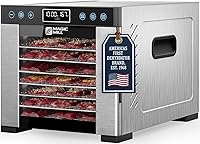
The mid-range tier is where you start paying for stainless steel, adjustable heat and extras like screens and fruit roll sheets. These models suit people who dry every week and want more precise control.
The Cosori 5-Tray Stainless Steel is a good example. Its temperature runs from 95 to 176°F in 1°F increments, and it includes four presets for jerky, fruit, vegetables and yogurt.
A rear fan pushes hot air evenly through the trays, and the 48-hour timer means you can set it and walk away.
It comes with a mesh screen, a fruit roll sheet and a recipe book, and the trays give 3.1 ft² of drying space in a footprint of 13.9 x 11.3 x 8.9 inches. Nothing plastic touches the food.
For jerky specifically, the higher heat matters: Cosori notes the USDA recommends 165°F for safe jerky. Our food dehydrator for jerky guide covers that safety side in more depth.
The stainless build also changes how you clean up. The trays are steel rather than plastic, so you can scrub them without worrying about scratches holding onto food residue.
That's a real part of what the mid-range step buys, and it's why people who dry acidic foods tend to move up from the budget tier.
What does a premium food dehydrator cost and who needs one?
The premium tier costs the most and is built for large batches, frequent use and hands-off drying. You pay for more trays, bigger drying area and more automation.
The Cosori 10-Tray Stainless Steel shows what this tier adds. Its 10 trays give 7.4 ft² of drying space and hold up to 5.5 lb of beef sliced to 5 mm in one batch.
It has 10 presets, a 46-recipe cookbook, two viewing windows and an interior light so you can check progress without opening the door.
It runs at under 48dB according to Cosori's internal lab testing, has auto-shutoff and dishwasher-safe trays. Temperature adjusts in 1°F steps within 95 to 167°F.
This tier makes sense for a big garden harvest, bulk jerky runs or pet treat batches you'd otherwise split across several sessions. If stainless is your priority, our roundup of the best stainless steel food dehydrators compares the options.
Where does the extra cost actually go?
Look past the tray count and the premium tier is mostly automation. The 10 presets mean you don't have to look up settings for each food type, and the 46-recipe cookbook gives you starting points.
The two viewing windows and interior light let you monitor drying without pulling out trays and losing heat. Auto-shutoff and a 48-hour timer handle the end of a long session.
Each of those is a small convenience on its own, but together they're a large part of why this model costs more than the 5-tray version.
How much does a food dehydrator cost to run?
Running cost is small compared with the purchase price, because a dehydrator draws modest wattage and only runs for hours at a time. The three models here draw 400, 480 and 640 watts.
To estimate a session, multiply the wattage by the hours it runs and divide by 1,000 to get kilowatt-hours. Then multiply by your local electricity rate.
A 400-watt unit running 8 hours uses about 3.2 kWh. Even at a high rate, that's a small fraction of what the machine cost.
Longer drying times matter more than wattage. Jerky can take 4 to 6 hours and fruit leather can run 8 or more, so a timer helps you avoid leaving the machine on longer than needed.
A unit with auto-shutoff like the 10-tray Cosori removes that worry.
Why do two dehydrators with the same tray count cost different amounts?
The gap usually comes down to material and controls. A plastic 5-tray unit and a stainless 5-tray unit both hold five trays, but the stainless body and trays cost more to make and last longer under frequent washing.
Digital controls add cost too. A fixed thermostat is cheap, while 1°F steps, multiple presets, a long timer and dishwasher-safe trays each add features and price.
Even tray size and shape shift the number: round trays fit different food layouts than rectangular ones.
Warranty length also varies. The Nesco FD-37 has a 1-year limited warranty, while both Cosori models carry a 2-year manufacturer warranty.
That longer coverage is part of what the mid-range and premium tiers include. Our Nesco Gardenmaster food dehydrator review shows how a larger Nesco model compares with the small FD-37.
How do you match a budget to what you'll actually dry?
Set your budget by your batch size and how often you dry, not by the top specs. Someone drying herbs twice a month and someone running jerky every weekend need different machines.
Start with a 4-tray model if you're new to dehydrating. The Nesco FD-37 handles herbs, snacks and small jerky runs and expands to seven trays later.
Move to five stainless trays when you dry weekly and want adjustable heat. Go to 10 trays when your batches fill more than one run on a smaller unit.
Material matters for cleaning and longevity. Stainless trays handle hot water and repeated washing better than plastic.
If you dry acidic foods like tomato or citrus often, stainless is the easier long-term choice. Check the temperature range too: jerky needs high heat for safety, so 167 to 176°F at the top end covers it.
How much does a food dehydrator cost overall?
For most people, a food dehydrator costs less than the first few batches suggest, and the tier you pick should match how often you dry. Pick the Nesco FD-37 if you want a low-cost start for herbs and small jerky batches.
Pick the Cosori 5-Tray Stainless Steel if you dry weekly and want 1°F control and presets.
Pick the Cosori 10-Tray Stainless Steel if you handle big harvests or bulk jerky and want hands-off drying.
The honest answer to how much does a food dehydrator cost is that the machine is the bigger spend, not the electricity. Buy for the batch size you'll actually run, and upgrade only when you're filling your current trays.
That keeps the cost in line with what you get.
Frequently asked questions
Does a food dehydrator use a lot of electricity?
It depends on wattage and how long it runs. The Nesco FD-37 draws 400 watts, the 5-tray Cosori 480 watts and the 10-tray Cosori 640 watts.
Multiply watts by hours of use and divide by 1,000 for kilowatt-hours, then check your local rate.
Is a stainless steel food dehydrator worth the extra cost?
It can be if you dry often or in large batches. Stainless steel trays handle frequent washing and hot temperatures well, and the higher-priced models here add more trays, presets and timers.
For occasional herb drying, a cheaper plastic model covers the job.
How many trays should I pay for?
Start with the batch size you actually dry. A 4-tray unit like the Nesco FD-37 handles herbs and small jerky runs and expands to 7 trays.
Five trays suit regular fruit and vegetable drying, while 10 trays fit large harvests and bulk jerky.
What is the cheapest way to start dehydrating?
Buy a small plastic model with a fixed temperature and four or five trays. It dries herbs, fruit and jerky without the extra cost of digital controls.
Upgrade later if you find yourself running multiple batches each week.