How Does a Food Dehydrator Work?
A food dehydrator works by warming the air to a low, steady temperature and moving it across the trays, which pulls moisture out of the food. The heater, the fan and the thermostat each do one job, and the trays hold the food in that airflow.
On this page (11 sections)
- What parts does a food dehydrator have?
- How does airflow in a food dehydrator work?
- What controls do you get on a food dehydrator?
- What temperature range do dehydrators use?
- How does a dehydrator remove moisture from food?
- How do tray count and drying area compare?
- What do mesh screens and fruit roll sheets do?
- Why do dehydrators use low heat instead of an oven?
- How do you tell when food is dry?
- What should you check before you buy a food dehydrator?
- What this means for picking a food dehydrator
A food dehydrator works by warming the air and moving it across the food, so the food dries slowly and steadily. This is how the food dries: the moving air does most of the job, because it carries water away from the surface of each piece.
The food dehydrators for jerky guide covers the machines themselves, and this page explains the parts that make them work.
What parts does a food dehydrator have?
Most models have a heat source, a fan, stacked trays and controls for temperature and time. Those four parts appear in the machines in the jerky dehydrator category.
The heat warms the air, and the fan pushes it through the stack of trays. Controls set the temperature and the timer.
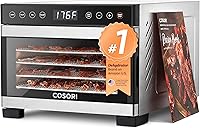
The Cosori 6-tray has a digital control panel and a timer that runs up to 48 hours. Its 600-watt motor drives a rear-mounted drying fan.
How a food dehydrator's heater and fan work together
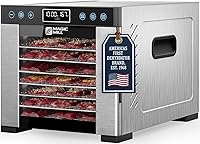
Magic Mill puts the fan and the heat at the back of the unit. It says that layout gives consistent airflow across every tray, with no tray rotation.
How does airflow in a food dehydrator work?
Makers use different airflow patterns, such as horizontal airflow, a rear fan, or air that moves up and across the trays. The pattern decides how warm air reaches the food.
Both Cosori models have horizontal airflow, and the 6-tray adds a rear-mounted drying fan. NESCO says its Converga-Flow system forces air up and across the trays to the center, with a top-mounted fan.
That is a different path from a horizontal or rear-fan layout, so check the design when you compare models.
| Model | Airflow | Temperature range |
|---|---|---|
| Cosori 5-tray | Horizontal airflow | 95°F to 176°F |
| Cosori 6-tray | Horizontal airflow, rear-mounted drying fan | 95°F to 165°F |
| Magic Mill Pro 7-tray | Rear fan and rear heat | 95°F to 176°F |
| NESCO 8-tray | Converga-Flow, up and across the trays | 95°F to 160°F |
Whatever the design, warm air has to pass every piece of food. Leave space between pieces on each tray, because pieces that touch block the airflow and dry more slowly.
What controls do you get on a food dehydrator?
Most models have buttons or a panel for temperature and time, and some add presets or a hold mode. The controls decide how much you adjust by hand.
Presets and keep-warm holds
The Cosori 5-tray has four presets, for jerky, fruit, vegetables and yogurt. Cosori says you can adjust them to your preferred time and temperature.
The Magic Mill Pro has a timer that runs up to 48 hours in 30-minute steps. Magic Mill says its keep-warm mode holds 95°F for up to 24 hours after the cycle ends, so check the manual before you rely on it.
What temperature range do dehydrators use?
Every model here starts at 95°F, and the top settings run from 160°F to 176°F. The top setting is one of the first things to check before you buy.
The Cosori 5-tray and Magic Mill Pro go up to 176°F, the Cosori 6-tray goes up to 165°F, and the NESCO goes up to 160°F.
All four cover USDA's 130 to 140°F hold range, since each top setting sits above 140°F. The how to make jerky in a dehydrator guide shows how that hold fits into the full process.
If you plan to dry both jerky and herbs, pick a model whose range starts low and reaches well above 140°F. That covers gentle herb settings and the jerky hold in one machine.
Why the hold range matters for jerky
USDA's jerky and food safety page describes two parts: a pre-heat step for the meat, then a hold at 130 to 140°F while it dries. A dehydrator that can't reach the hold range can't do the second part.
Confirm the top setting in the manual before you buy, not only the starting temperature.
How does a dehydrator remove moisture from food?
Warm, moving air takes moisture from the surface of the food. The fan carries that moisture away, so the surface keeps drying as the air passes over it.
Thin, even slices dry faster and more evenly, because the air reaches more of each piece. Juicy or whole items take longer, since there is more water to remove.
Why slice thickness changes drying time
Slices of the same thickness dry at a similar pace, which makes a full tray easier to judge. A thick or uneven piece holds its water longer than a thin one.
Herbs are a different case. The how to dehydrate herbs guide covers how to load and test them.
How do tray count and drying area compare?
Tray count tells you how many layers fit, and drying area tells you how much food fits on them. The two numbers don't always move together.
The Cosori 5-tray gives 3.1 square feet across five trays that each measure 9 x 10 inches. The Cosori 6-tray gives 6.5 square feet across six trays, which is more than double the area for one extra tray.
NESCO says its 8-tray model can expand to 30 trays, which suits large harvests. The Magic Mill Pro has seven full-size trays, so compare their size against your usual batch before you order.
What do mesh screens and fruit roll sheets do?
Mesh screens hold small or loose pieces, and fruit roll sheets hold soft foods that would otherwise fall through the trays. Every machine here comes with some version of both.
Magic Mill says its two mesh screens suit herbs and small items, and its fruit roll or drip tray suits fruit leather, marinades and easy cleanup. Both Cosori models include one mesh screen and one fruit roll sheet.
NESCO includes 8 fruit roll sheets and 8 Clean-A-Screens with the Gardenmaster.
Why do dehydrators use low heat instead of an oven?
Dehydrators hold temperatures far below baking heat, and the models here top out between 160°F and 176°F. Low, steady heat removes water from the food slowly instead of cooking it.
A steady setting also makes it easier to repeat a batch. Write down the temperature and the tray layout you used, so the next batch starts from the same place.
How do you tell when food is dry?
Test the food by feel. Dried fruit should feel pliable and leathery, not sticky or wet when you tear it.
Dried vegetables should be brittle or crisp. Dried herbs should crumble easily when you rub them between your fingers.
Check the manual's chart first
Your machine's manual and the National Center for Home Food Preservation both have drying guidance. Use those charts for exact settings, since drying time changes with load size, humidity and the machine itself.
What should you check before you buy a food dehydrator?
Look at the temperature range, the drying area and the airflow design, then read the manual.
The top setting has to clear the hold range you need, so check it rather than the starting number. Compare the square feet of drying space too, because the tray count alone can mislead.
Airflow design matters for loading. Look at where the fan sits and how the air moves, since that affects how you arrange the trays.
The how to choose a food dehydrator guide walks through each choice in order. If you want a steel body, look at the best stainless steel food dehydrators.
For a side-by-side look at two popular machines, see Cosori vs Magic Mill.
What this means for picking a food dehydrator
How a food dehydrator works also tells you what to compare: the top temperature, the drying area in square feet and where the fan sits. Pick a model whose top setting is above 140°F if you plan to make jerky.
For a shortlist built for jerky, start with the best dehydrators for jerky. Then check the manual's drying chart before you begin.
Frequently asked questions
How does a food dehydrator work?
A food dehydrator heats the air, and a fan moves that air across the food. The warm, moving air carries water off the surface of each piece, and a thermostat keeps the heat in a set range while the food dries.
What are the main parts of a food dehydrator?
Most models have a heat source, a fan, stacked trays and controls for temperature and time. Some also come with mesh screens or fruit roll sheets for small or soft foods, and your manual shows how each part fits together on your model.
What temperature does a food dehydrator need?
USDA advises holding a dehydrator at 130 to 140°F while it dries meat for jerky. The Cosori, Magic Mill and NESCO models in this guide start at 95°F and top out between 160°F and 176°F, so check your own machine's range before you buy.
Does the tray count change how a food dehydrator works?
Tray count changes how much food fits in one batch, but trays differ in size, so compare the square feet of drying space as well. The airflow design and the temperature range also decide how a machine handles your food.