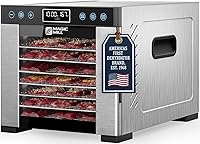
Stainless Steel vs Plastic Tray Dehydrators
The Cosori 5-tray stainless model tops out at 176°F and weighs 10.8 pounds, while the BPA-free plastic model tops out at 165°F and weighs 4.9 pounds. Pick stainless if you want steel trays and the higher top setting, and plastic if you want a light unit that can expand to 7 trays.
On this page (15 sections)
- The specs side by side
- Stainless steel vs plastic trays in a dehydrator
- Temperature range and top setting
- Weight, size and footprint
- Tray size, capacity and expansion
- Power, presets and timer
- What comes in the box
- Loading the trays and airflow
- Noise, cleaning and upkeep
- Garden produce on five trays
- Four questions that settle it
- Warranty and what to read first
- Who the stainless model suits
- Who the plastic model suits
- Which tray material to choose for a dehydrator
Stainless steel vs plastic tray dehydrators comes down to weight, top temperature and room to grow. This comparison puts two Cosori 5-tray models side by side: one with stainless steel trays and one with BPA-free plastic trays.
The stainless model goes hotter, and the plastic model weighs less than half as much. We compared the specs, controls and upkeep of each, so you can see where the trade-offs fall.
 Best for stainless trays and a higher top setting
Cosori 5-Tray Stainless Steel
 Best for a light 5-tray dryer on a budget
Cosori 5-Tray BPA-Free Plastic
The specs side by side
The stainless model is the heavier, more powerful unit, and the plastic model is the lighter one that can add trays. The table sets cooking space, power and size next to each other.
| Product | Best for | Cooking space | Power | Size | Our score |
|---|---|---|---|---|---|
| Cosori 5-Tray Stainless Steel | stainless trays and a higher top setting | 3.1 sq ft, 5 trays | 480 W | 13.9D x 11.3W x 8.9H in | 8.7 |
| Cosori 5-Tray BPA-Free Plastic | a light 5-tray dryer on a budget | 5 trays, expands to 7 | 350 W | 12.2D x 12.2W x 8.98H in | 8.2 |
Both models come from Cosori, have five trays and carry a 2 year manufacturer warranty, so the table mainly shows where they split.
Stainless steel vs plastic trays in a dehydrator
The trays are the main material difference. The stainless model has stainless steel trays and a stainless steel build, while the plastic model is made of polypropylene (PP) and has BPA-free trays.
Stainless steel vs plastic: what Cosori says
Cosori says the stainless model has no plastic contact with food. For the plastic model, it calls the trays BPA-free and says the solid material is more durable than fragile clear shells.
BPA-free is Cosori's description, and Cosori says nothing more about how the two materials compare on safety. So we compare them on weight, temperature and features instead.
USDA's jerky guidance applies to both units, whatever the tray material. Read USDA's jerky and food safety guidance before your first batch.
Temperature range and top setting
The stainless model goes to 176°F, and the plastic model tops out at 165°F. Both start at 95°F and adjust in 1°F steps.
Both ranges include the 130 to 140°F hold that USDA describes for drying meat. That makes the extra 11°F on the stainless model room at the top, not a requirement for the drying step.
If you dry mostly fruit and herbs, the low end of the range matters as much as the top. Both models start at 95°F, so that end is the same on each.
Weight, size and footprint
The plastic model weighs 4.9 pounds, less than half the stainless model's 10.8 pounds. That 5.9 pound gap is the clearest sign of how different the two builds are.
The stainless model measures 13.9 inches deep, 11.3 inches wide and 8.9 inches tall. The plastic model has a round body with a 12.2 by 12.2 inch footprint and stands 8.98 inches tall.
Moving and storing the unit
If you move the unit often, the plastic model is easier to carry. A stainless unit at 10.8 pounds is heavier to lift onto a high shelf, so measure the storage spot before you buy.
On a narrow counter, the plastic model's 12.2 inch depth beats the stainless model's 13.9 inches. Leave room behind either unit for the cord.
Height won't separate them, since the stainless model stands 8.9 inches tall and the plastic model 8.98 inches.
Tray size, capacity and expansion
The stainless model has five trays that measure 9 by 10 inches and add up to 3.1 sq ft of drying space. The plastic model's five round trays have an outer diameter of 12.2 inches and an inner diameter of 11.6 inches.
The two tray shapes give you different amounts of usable space. A 9 by 10 inch tray is 90 square inches, and an 11.6 inch inner diameter works out to roughly 105 square inches on paper.
Cosori states a drying area only for the stainless model, so don't treat that second number as a spec.
Cosori says the plastic model can expand to 7 trays, which gives you room to grow without buying a new unit. Cosori doesn't state an expansion option for the stainless model, so plan on five trays.
If you need more than five trays, see best large food dehydrators for bigger units. The Nesco Gardenmaster review covers an 8-tray model that Nesco says can expand.
Adjustable tray height on the plastic model
Cosori says the plastic model lets you set the tray heights. It describes that as a fit for thick-cut ingredients and for easier storage.
Cosori doesn't mention height adjustment for the stainless model.
Power, presets and timer
The stainless model is rated 480 W and has four presets for jerky, fruit, vegetables and yogurt. The plastic model is rated 350 W and uses a touch-control LED display with automatic shutoff and overheat protection.
Both have a timer of up to 48 hours in 30 minute steps, so long batches work on either one. The stainless presets save setup time, and Cosori says you can change the time and temperature of each one.
Check that the cord reaches an outlet from the spot you picked, because the stainless model draws 480 W.
Presets versus manual settings
Presets help when you make the same snack again and again. Both models adjust in 1°F steps, so you can dial in an exact setting without using a preset at all.
What comes in the box
The stainless model comes with 5 stainless steel trays, a mesh screen, a fruit roll sheet, a recipe book, a user manual and a quick start guide. The plastic model comes with 5 trays, a 50-recipe book and a user manual.
If you plan to make fruit leather or dry small items, the stainless box already has the sheet and screen. For the plastic model, Cosori points to its N051 accessories for extra sheets.
Loading the trays and airflow
Loading matters as much as the material. Spread slices in a single layer and leave a little space between pieces so air can reach each one.
Cosori describes a rear fan and horizontal airflow on the stainless model. For the plastic model, it highlights adjustable tray height instead, so check the manual for how air moves through the trays.
For the basics of fans and heat, see how a food dehydrator works.
How many trays a batch needs
Both models give you five trays, so the batch size comes down to how many pieces fit flat on each tray. Plan around the tray count and the space on each tray, not around the material.
If a batch won't fit on five trays, the plastic model's expansion accessory is the only growth path Cosori names. Otherwise, split the batch into two runs and keep the tray loads even.
Noise, cleaning and upkeep
Cosori says the plastic model runs below 47 dB. It gives no noise figure for the stainless model, so ask Cosori if noise matters in your kitchen.
Let the unit cool, then wash the trays and wipe the housing. Check the manual before you put any tray in a dishwasher.
Garden produce on five trays
Five trays suit herbs, fruit and vegetables in small batches, and the same loading rules apply. Juicy or whole pieces take longer than thin slices, and humidity and load size change drying time too.
Dryness cues work better than the clock. Dried fruit should feel pliable and leathery, not sticky or wet when you tear it, vegetables should be brittle or crisp, and herbs should crumble easily.
For exact settings, check your manual's chart and the National Center for Home Food Preservation guidance.
Four questions that settle it
Four checks decide most of this choice. Answer them in order.
- Do you need more than 165°F? Only the stainless model goes higher, up to 176°F.
- Will you lift it often? The plastic model weighs 4.9 pounds against 10.8 pounds.
- Might you outgrow five trays? Only the plastic model has a named way to add trays.
- Do you want steel against your food? Cosori says the stainless model has no plastic contact with food.
Warranty and what to read first
Both Cosori models carry a 2 year manufacturer warranty, so the term doesn't separate them. Read the full terms before you buy, since they set what counts as a claim.
Who the stainless model suits
The stainless model suits a cook who wants steel trays, a 176°F top setting and presets for common snacks. It fits a counter that stays in one spot, since it weighs 10.8 pounds.
- A cook who wants stainless steel trays and a stainless build.
- Someone who wants presets for jerky, fruit, vegetables and yogurt.
- A buyer who is happy with a heavier unit on the counter.
Skip it if you move the unit often or lift it onto a high shelf. For a larger stainless option, see our Cosori 6-tray stainless steel dehydrator review.
Who the plastic model suits
The plastic model suits a cook who wants a light, round dryer with BPA-free trays and room to grow to 7 trays. It also fits a shopper who wants a budget five-tray unit to start with.
- A cook who wants a unit that is easy to move and store.
- Someone who may add trays later with the expansion accessory.
- A buyer who does not need a top setting above 165°F.
Skip it if you want stainless steel trays or a top setting above 165°F. In that case the stainless model is the better match, even though it weighs more.
Before you pick either model, how to choose a food dehydrator lists the checks that apply to any unit.
Which tray material to choose for a dehydrator
Choose the stainless model if you want steel trays and a 176°F top setting. Choose the plastic model if you want a lighter unit that can grow to 7 trays.
Both models can dry jerky when you follow USDA's steps and your manual, so the choice rests on weight, top setting and tray material. Our score weighs specs, features and buyer feedback against what you're shopping for.
The stainless model scores a little higher here because it offers more range and steel trays. The plastic model wins on weight and room to grow.
- Pick the stainless model if the trays and body must be stainless steel and the top setting matters.
- Pick the plastic model if you want the lighter build and the option to reach 7 trays.
If you want a broader set of stainless choices, see best stainless steel food dehydrators. Our food dehydrators for jerky guide explains the basics.
Browse all stainless and large dehydrator guides for more.
Frequently asked questions
Is a stainless steel dehydrator better than a plastic one?
Neither is better across the board, because each material suits a different buyer. The stainless Cosori reaches 176°F and has steel trays, while the plastic Cosori weighs 4.9 pounds and can grow to 7 trays, so pick by the features you need and read the manual.
Are BPA-free plastic trays the same as stainless steel trays?
They are different materials, so the choice comes down to weight, feel and the features you want. Cosori describes the plastic trays as BPA-free and says the stainless model has no plastic contact with food, so compare both against your needs and read the manual's cleaning steps.
Can you add more trays to the Cosori plastic dehydrator?
Yes, Cosori says the plastic model can expand to 7 trays, and you can find the 2 extra trays by searching for the part number CFD-TR051-WUS. Cosori doesn't state an expansion option for the stainless model, so confirm the fit for your exact unit before you order.
What temperature range do these two Cosori dehydrators offer?
The stainless model runs from 95 to 176°F in 1°F steps, and the plastic model runs from 95 to 165°F in 1°F steps. Both ranges include the 130 to 140°F hold that USDA describes for drying meat, so follow USDA's jerky guidance and each manual for your own steps.