Deer Jerky in a Dehydrator: Venison Recipe and Temp
For a venison jerky recipe in a dehydrator, pre-heat the meat to 160°F, then dry it at 130°F to 140°F, the same USDA steps that apply to beef. This guide covers the kitchen steps only: slicing, seasoning, trays and the dehydrator.
On this page (11 sections)
- What temperature should venison jerky reach in a dehydrator?
- How do you make a venison jerky recipe in a dehydrator?
- How do you slice venison for jerky?
- Which seasoning works for venison jerky?
- Which trays work for deer jerky strips?
- Do you need a mesh screen for deer jerky?
- Which dehydrator suits venison jerky?
- Can the same dehydrator dry beef and deer?
- What do you need to make deer jerky at home?
- How do you clean the trays after a deer batch?
- Venison jerky in a dehydrator starts with the USDA steps
Venison jerky in a dehydrator follows the same kitchen steps as beef jerky, and the same USDA guidance applies to both. You slice the meat thin, season it, heat it to 160°F, then dry it on the trays.
This guide covers the kitchen side only: slicing, seasoning, trays and the dehydrator itself. For the full process, see how to make jerky in a dehydrator.
What temperature should venison jerky reach in a dehydrator?
USDA advises heating the meat to 160°F before the dehydrating step, then holding the dehydrator at 130°F to 140°F while it dries the meat. Those are the two numbers to know.
Check the meat with a food thermometer, since the reading is what confirms the pre-heat step. The dehydrator temperature for beef jerky page covers the same settings from the beef side.
Why the pre-heat step matters
USDA notes that many dehydrator manuals leave out the pre-heat step. A dehydrator on its own may not reach a temperature that kills bacteria, so don't skip it.
The USDA jerky and food safety page has the agency's full guidance. Read it alongside your machine's manual.
How do you make a venison jerky recipe in a dehydrator?
Work in this order: trim and slice, season, pre-heat, then dry. The steps are the same for deer meat as for beef.
- Trim and slice. Cut away visible fat, then slice the meat into thin, even strips.
- Season. Coat the strips with your seasoning kit, and follow the kit's directions for any cure.
- Pre-heat. Heat the meat to 160°F, and confirm it with a food thermometer.
- Load the trays. Lay the strips in a single layer with space between them, so air can move around each one.
- Dry. Hold the dehydrator at 130°F to 140°F, and check the strips against your manual's chart.
Drying time depends on strip thickness, humidity and how full the trays are, so no single time fits every batch. The how long jerky takes in a dehydrator guide explains the timing factors.
How do you slice venison for jerky?
Cut the meat into thin, even slices, since even pieces dry more evenly than thick, uneven ones. A steady thickness makes the batch easier to manage.
A sharp knife works. A slicer makes the strips more uniform.
Use a slicer for even strips
A slicer with an adjustable thickness setting makes strips of the same width easier to cut. The CUSIMAX adjusts from 1 to 20 mm and has a 200-watt motor with an 8.7-inch stainless steel blade.
You place the meat on the food carriage and hold it in place with the food pusher. The blade, pusher and carriage all come off for cleaning.
CUSIMAX says not to run the slicer continuously for more than 7 minutes, so read its manual before the first batch.
Which seasoning works for venison jerky?
Hi Mountain's Hunters Blend is made for beef and venison, and the kit includes a seasoning packet, a cure packet, a shaker bottle and step-by-step instructions.
Hi Mountain says one kit seasons up to 15 pounds of whole-muscle meat or up to 10 pounds of ground meat. Follow the kit's directions for the cure, because this guide doesn't give cure amounts.
Basics of a venison jerky recipe
Most venison jerky recipes follow the same order: slice, season, pre-heat, dry. The kit's instructions set the seasoning steps, and your dehydrator's manual sets the drying details.
Season the strips in small groups, so every piece gets a similar coat and none sit stacked. For a wider set of blends, see the seasoning kits for a dehydrator.
Which trays work for deer jerky strips?
No single tray suits every batch. Pick the tray set first, then count the strips you plan to make, so the tray count matches the batch.
The Cosori 6-tray has six stainless trays and 6.5 square feet of drying space. It comes with one mesh screen and one fruit roll sheet, and Cosori says the trays are dishwasher-safe.
A bigger tray count for a larger batch
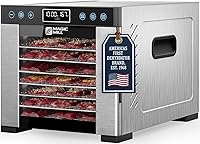
The Magic Mill Pro has seven full-size trays, plus two mesh screens and a fruit roll or drip tray. Magic Mill says its rear fan and rear heat give even airflow across every tray, with no tray rotation.
Do you need a mesh screen for deer jerky?
Not for full-length strips, which rest across the tray grid. Small trimmings can slip through the grid, and a mesh screen keeps them on the tray.
Both machines above include at least one mesh screen. Wipe it down with the trays after each batch, since seasoning can cling to the mesh as it does to the metal.
Which dehydrator suits venison jerky?
Pick a model whose range covers 130°F to 140°F, with enough trays for the batch you plan to make. The top setting has to sit above 140°F to hold that range.
The Cosori 6-tray runs from 95°F to 165°F, and the Magic Mill Pro runs from 95°F to 176°F. Both are rated at 600 watts and both cover the hold range.
The Cosori measures 17.8 inches deep, 13.4 inches wide and 12.4 inches tall, and it weighs 18.1 pounds. The Magic Mill Pro measures 15.5 inches deep, 11.3 inches wide and 10.8 inches tall, and it weighs about 16 pounds.
Measure your counter before you choose, and compare the drying space with the strips you plan to dry. For the best picks by use, see best dehydrators for deer and venison jerky.
The how to choose a dehydrator for deer meat guide walks through the same checks step by step.
Can the same dehydrator dry beef and deer?
Yes. The same machine and trays can dry both, and the Hi Mountain kit is made for beef and venison.
Clean the trays between batches so seasoning from one doesn't carry over into the next. Keep the kit notes for each batch separate, so you can match them later.
What do you need to make deer jerky at home?
You need five things:
- A dehydrator whose range covers the 130°F to 140°F hold
- A sharp knife or a slicer
- A food thermometer
- A seasoning kit or your own blend
- Clean trays
The thermometer checks the meat itself, not the air inside the dehydrator. That is why the pre-heat step depends on it.
How do you clean the trays after a deer batch?
Wash the trays soon after the batch, since seasoning and meat oils can cling to the metal. Warm soapy water works for most trays.
Magic Mill describes its trays as 100% stainless steel. Check each maker's cleaning notes before you put trays in a dishwasher.
Venison jerky in a dehydrator starts with the USDA steps
For a venison jerky recipe in a dehydrator, pre-heat the meat to 160°F, then dry it at 130°F to 140°F, following the kit's own directions for any cure. Those steps apply to deer meat as they do to beef.
Choose a dehydrator that covers the hold range, slice the meat evenly and read the manual before you start. If a step is unclear, go back to the manual, since it comes first for your machine.
The food dehydrators for jerky guide compares the machines, and the venison and game category has more picks for this kitchen work.
Frequently asked questions
What temperature should deer jerky reach before drying?
USDA advises heating the meat to 160°F before the dehydrating step and checking it with a food thermometer. The same guidance applies to jerky made from meat, venison included, and after the pre-heat you hold the dehydrator at 130°F to 140°F while the strips dry.
Is deer jerky made the same way as beef jerky?
The kitchen steps are the same: slice the meat into thin, even strips, season it, pre-heat it as USDA advises, then dry it on the trays. The seasoning kit and your dehydrator's manual set the details, and any cure should follow the kit's own directions.
Which trays work best for deer jerky strips?
No single tray suits every batch, so match the trays to the number of strips you plan to dry. The Cosori 6-tray includes a mesh screen and a fruit roll sheet, and the Magic Mill Pro includes two mesh screens and a fruit roll or drip tray.
Do you need a meat slicer for deer jerky?
No, a sharp knife can cut the strips, but a slicer makes it easier to cut every strip to the same thickness. Thin, even slices dry faster and more evenly than thick, uneven ones, and the CUSIMAX slicer adjusts from 1 to 20 mm.