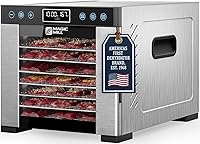
How Long Does It Take to Make Jerky in a Dehydrator?
How long it takes to make jerky in a dehydrator has no single answer, because thickness, humidity, tray load and the machine all change it. Follow USDA's heat steps and your manual first, then judge the strips by feel.
On this page (7 sections)
- How long does jerky take in a dehydrator?
- Start with the heat rules, then set the timer
- How do you set the timer on a dehydrator?
- How do you tell when jerky is done?
- Can a kitchen scale help you track jerky drying?
- How does a full load change the time?
- Plan your first timed batch: how long jerky takes to make
A timer doesn't say when jerky is done, so use it to plan the cycle and judge the strips themselves. This guide shows what moves the clock, how to set the timer and how to tell when a batch is ready.
For the full routine, start with how to make jerky in a dehydrator, then come back here for timing. The food dehydrators for jerky guide covers the machines themselves.
How long does jerky take in a dehydrator?
There is no single time. Slice thickness, humidity, how full the trays are and the machine itself all change it, so one batch's time is a starting point for the next, not a rule.
Slice thickness and spacing
Thin, even slices dry faster and more evenly, while thick strips take longer. Cut every strip to the same thickness so the batch finishes together.
Strips that touch block the airflow, and the crowded spots take longer. Leave a little space between pieces and spread the batch across the trays.
Humidity and room air
Damp air can take up less extra moisture, so drying slows on a humid day. Expect a longer cycle when the air in your kitchen feels heavy.
The machine itself
Wattage, fan design and temperature steps differ from one dehydrator to the next, so another cook's hours may not match yours. How a food dehydrator works explains the heater and fan behind those differences.
Fan placement matters for evenness. Cosori says the rear fan on its 6-tray gives more even drying without manual intervention, and Magic Mill says the rear fan on its Pro 10-tray means no shelf rotation.
If your manual has a drying chart, treat it as a starting point and keep your own notes for the rest.
When strips finish at different times
Take out the strips that are ready and put the rest back. Next time, sort the strips by thickness before you load, so the ones on a tray finish together.
How long jerky takes in your own dehydrator
The best answer for your kitchen comes from your own notes. Write down the same few things after every batch, so you can compare one run with the next.
| What to write down | Why it helps |
|---|---|
| Slice thickness | Thicker strips are the usual reason a batch runs long. |
| Tray load | A full tray dries differently from a half-full one. |
| Dehydrator setting | Confirms you stayed in USDA's 130 to 140°F range. |
| Room humidity | A damp day can stretch the cycle. |
| Cycle length | The number you'll compare next time. |
| Weight before and after | A second record of how much water left. |
Start with the heat rules, then set the timer
USDA advises heating meat to 160°F before the drying step, then holding the dehydrator at 130 to 140°F while it dries the meat. Do the pre-heat first, then start the timer once the strips are on the trays.
The pre-heat happens before drying, so it isn't part of the drying time, but it does add time to your session. USDA also notes that a dehydrator on its own may not reach a temperature that kills bacteria, so the clock is never the only step.
The USDA jerky and food safety page has the full guidance. For the heat settings in more detail, see dehydrator temperature for beef jerky.
How do you set the timer on a dehydrator?
Set the timer for a stretch you can check, then judge the strips when it ends. A timer marks the cycle, not the dryness of each strip.
The Cosori 6-tray timer runs up to 48 hours, which is the range you can set and not a drying time.
The Magic Mill Pro 10-tray has a digital countdown timer that shuts the unit off when the time is up. A shutoff stops the heater, but it can't tell you whether the strips are dry.
Timer ranges differ by machine
The Magic Mill Pro 7-tray runs up to 48 hours in 30-minute steps, and the Excalibur Select 6-tray runs up to 60 hours. A longer range doesn't mean jerky needs a long cycle, it only gives you room to set one.
Pick a first cycle you can be home for, then check the strips and add time in small steps if they need it. Your notes will tell you where to start next time.
How do you tell when jerky is done?
Judge the strips by feel once they cool, since warm jerky feels softer than it will later. Take one off the tray, let it cool, then decide.
Check more than one tray
Pick strips from different trays and different spots, since they may not finish together. Check each one after it cools.
A tacky or soft strip needs more time
A piece that still feels tacky or soft after it cools needs more drying. Put it back on the tray and check it again later.
Can a kitchen scale help you track jerky drying?
A kitchen scale can help you compare batches. Weigh the sliced, seasoned meat before it goes on the trays and weigh the strips again at the end of the cycle.
Etekcity's scale weighs up to 11 lb in 1 g steps and has a tare function, and its 304 stainless steel surfaces wipe clean. Etekcity backs it with a 2-year warranty.
Use the numbers as your own record
Two batches with similar thickness and load can still finish at different times. Compare the start weight, the end weight and the cycle length in your notes, and keep judging the cooled strips by feel.
How does a full load change the time?
A full load takes longer to finish, so expect a big batch to need more time than a small one. Crowded trays slow the airflow, so the strips in the middle may need extra time.
If a full load is hard to check, split it into two smaller runs. Each run is easier to load evenly and easier to check when the timer ends.
For machines built for bigger batches, read our best large food dehydrators roundup. If you are still choosing a machine, how to choose a food dehydrator compares trays, watts and temps.
Plan your first timed batch: how long jerky takes to make
Start by slicing to an even thickness, weighing the meat and checking the pre-heat with a probe before the timer starts. Then load the trays with space between strips and set the dehydrator to a steady number in the 130 to 140°F range.
When the timer goes off, take a few strips from different trays, let them cool and judge them by feel. Write down how long the cycle ran, so the next batch starts from a number that's yours.
If you're still deciding whether this method suits you, can you make jerky in a dehydrator? explains when it fits, and dehydrator vs oven for beef jerky compares the oven route. Browse more jerky dehydrator guides when you want to compare machines.
Frequently asked questions
How long does it take to make jerky in a dehydrator?
There is no single time, because thickness, humidity, tray load and the machine all change how long the strips take. Follow USDA's heat steps and your manual first, then judge the strips by feel once they cool rather than by the clock.
Should I follow the timer or the jerky itself?
Use the timer to plan the cycle, but judge the jerky itself. A timer marks when the cycle ends, not whether every strip is dry, so check several pieces from different trays after they cool, since warm jerky feels softer than it will later.
Does thin jerky dry faster?
Yes, thin, even slices dry faster and more evenly, while thick pieces take longer and may finish at different times. Cut each strip to the same thickness so the whole batch is ready together, instead of some strips done and others still drying.
Does a kitchen scale help with jerky timing?
A kitchen scale lets you weigh the meat before and after the cycle and compare the change from batch to batch. It is a record of your own pattern, not a doneness test, so keep judging the cooled strips by feel as well.