Can You Make Jerky in a Dehydrator?
Yes, you can make jerky in a dehydrator, but USDA advises heating the meat to 160°F before it goes in. A food thermometer confirms when the meat has reached that point.
On this page (12 sections)
- Why does USDA say to pre-heat the meat?
- What temperature should a dehydrator hold for jerky?
- Which meats work for jerky in a dehydrator?
- What makes a good jerky dehydrator?
- How do you make jerky in a dehydrator?
- How much counter space does a jerky dehydrator need?
- Do you need a seasoning kit to make jerky?
- Can an oven or smoker make jerky instead?
- What do you need to get started?
- What mistakes do beginners make with jerky in a dehydrator?
- How do you clean the trays after making jerky?
- Yes, you can make jerky in a dehydrator if you pre-heat first
Yes, you can make jerky in a dehydrator. The machine dries thin strips of meat with low, steady heat and moving air.
The catch is the first step. USDA says to heat the meat before it goes into the dehydrator, because a dehydrator on its own may not reach a temperature that kills bacteria.
Once you know the method, the food dehydrators for jerky guide helps you pick a machine.
Why does USDA say to pre-heat the meat?
USDA advises heating the meat to 160°F, or 165°F for poultry, before the dehydrating step. Check the temperature with a food thermometer.
USDA also notes that many dehydrator manuals leave out this step, so read the agency's advice next to your machine's manual. The USDA jerky and food safety page gives its own wording.
Check the meat with a thermometer
An instant-read thermometer reads the meat itself, so you can confirm the number before anything goes on the trays.
What temperature should a dehydrator hold for jerky?
USDA advises holding the dehydrator at 130 to 140°F while it dries the meat. That hold comes after the pre-heat step, not in place of it.
Your machine has to reach that range, so check its lowest and highest settings in the manual. A model whose top setting sits below 140°F can't hold it.
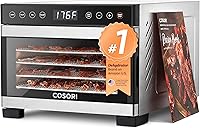
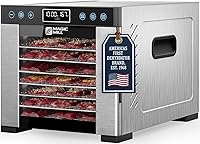
The Cosori 5-tray and the Magic Mill Pro both run from 95 to 176°F in 1°F steps, so either one covers the hold. If your machine has a jerky preset, compare its temperature with USDA's range and your manual before you rely on it.
For the full sequence, read how to make jerky in a dehydrator. The dehydrator temperature for beef jerky page goes deeper on the settings.
Which meats work for jerky in a dehydrator?
Beef is the usual choice, and the same method suits poultry and other meats. Hi Mountain says its seasonings work on beef, venison, poultry and fish.
Poultry gets a higher pre-heat under USDA's advice, 165°F instead of 160°F. Check which meat you have before you start.
What makes a good jerky dehydrator?
A good jerky machine reaches the 130 to 140°F hold, has a timer with automatic shutoff and gives you enough tray room for your batch.
Magic Mill's timer runs up to 48 hours in 30-minute steps, then shuts the machine off. Cosori's timer also runs from 30 minutes to 48 hours.
How do you make jerky in a dehydrator?
Slice the meat into thin, even strips, season it, pre-heat it as USDA advises, then dry it on the trays.
Thin, even strips dry faster and more evenly than thick, uneven ones. Cutting every strip to the same thickness keeps the batch consistent.
Some cooks slice with the grain and some against it, which changes how the strips chew. Pick one direction for the whole batch so the texture stays even.
Drying time changes with strip thickness, humidity and how full the trays are. The guide on how long jerky takes in a dehydrator explains how to read those changes.
Dry jerky strips in a dehydrator in one layer
Lay the strips in a single layer so the air can reach every piece. Keep the layout the same from batch to batch, so you can compare one run with the next.
Pick a tray count for a bigger batch
More trays hold more strips at once, so tray count matters more as your batches grow. The Magic Mill Pro adds 2 mesh screens and a fruit roll or drip tray to its seven trays.
How much counter space does a jerky dehydrator need?
A 5-tray machine fits a small counter spot, and a 7-tray machine needs a little more depth and height. Both of these are 11.3 inches wide.
The Cosori 5-tray measures 13.9 inches deep and 8.9 inches tall, and it weighs 10.8 pounds. The Magic Mill Pro measures 15.5 inches deep and 10.8 inches tall, and it weighs about 16 pounds (7.26 kg).
The Cosori draws 480 watts and the Magic Mill draws 600 watts. Check that your outlet and counter suit the machine before you order.
Do you need a seasoning kit to make jerky?
No. A seasoning kit is a shortcut, not a requirement, but any cure should follow its own directions.
Hi Mountain's Cracked Pepper 'N Garlic kit includes a seasoning packet, a cure packet, a shaker bottle and detailed instructions. Hi Mountain says one kit seasons up to 15 pounds of whole-muscle meat or up to 10 pounds of ground meat.
If you use the cure packet, follow the kit's directions exactly. This guide doesn't give cure amounts, because the kit's own instructions are the right source.
Our seasoning kit picks compare other flavors if the Hi Mountain blend isn't the one you want.
Can an oven or smoker make jerky instead?
Yes. An oven or smoker can make jerky too, and USDA says the pre-heat step applies to home ovens and dehydrators alike.
A dehydrator is a countertop machine for steady low-heat drying. A smoker is generally a bigger, outdoor machine that adds smoke flavor.
Neither machine is safer by default, so follow USDA and the maker's manual for whichever you use. Compare the two in dehydrator vs smoker for beef jerky and dehydrator vs oven for beef jerky.
What do you need to get started?
You need a dehydrator, a sharp knife or slicer, a food thermometer, a seasoning kit or your own blend, and clean trays.
The thermometer checks the meat itself, not the air inside the dehydrator. That is why the pre-heat step depends on it.
Start with a batch you can finish in one session, so you can check each step as you go. A first batch teaches you more about your machine than a big one does.
What mistakes do beginners make with jerky in a dehydrator?
Uneven slices, a skipped pre-heat step and crowded trays cause most of the trouble.
Uneven slices dry at different rates, so thin pieces can finish while thick ones are still moist. Cut the meat to a steady thickness before you season it.
Skipping the pre-heat step is the biggest mistake, because USDA's guidance depends on it. Check the meat with a food thermometer rather than trusting the dehydrator alone.
A crowded tray changes the drying time, so leave space between strips. Load size is one reason your manual's chart matters.
How do you clean the trays after making jerky?
Wash the trays soon after the batch, since seasoning and meat oils can cling to the metal. Warm soapy water works for most trays.
Both machines here use stainless steel trays, and Cosori says no plastic touches the food. Check the manual before you put any tray in the dishwasher.
Yes, you can make jerky in a dehydrator if you pre-heat first
Follow USDA's steps: heat the meat to 160°F, then dry it with the dehydrator held at 130 to 140°F. Those two numbers are the core of the method.
Pick the Cosori 5-tray if you make small batches on a tight counter, and the Magic Mill Pro if you dry a lot of meat at once. Then compare more machines in the best dehydrators for jerky.
Browse more jerky dehydrator picks when you are ready to shop.
Frequently asked questions
Can you make jerky in a dehydrator without a seasoning kit?
Yes, a kit is a shortcut for the seasoning, not a requirement, and a homemade blend works too. The USDA pre-heat step still applies to the meat, and any cure you use should follow its own directions and your dehydrator's manual.
Does a dehydrator get hot enough for jerky?
Only if its range reaches the temperatures you need, since USDA advises a 130 to 140°F hold while the meat dries. A dehydrator alone may not reach a temperature that kills bacteria, so heat the meat to 160°F first and check it with a thermometer.
Is an oven or smoker better than a dehydrator for jerky?
Neither is better by default. A dehydrator is a countertop machine for steady low-heat drying, a smoker is generally a bigger outdoor machine that adds smoke flavor, and USDA says the pre-heat step applies to home ovens and dehydrators alike, so follow its guidance and the manual for whichever you use.
What temperature should a dehydrator hold for jerky?
USDA advises holding the dehydrator at 130 to 140°F while it dries the meat, after you heat the meat to 160°F and confirm it with a food thermometer. Check your model's range in the manual, since its top setting has to reach at least 140°F to hold that temperature.