Dehydrator vs Smoker for Beef Jerky
A dehydrator is a countertop box for steady, low-heat drying, while a smoker is a larger outdoor cabinet built for smoke flavor. Pick the dehydrator for a simple jerky routine, and the smoker if smoke flavor and outdoor space matter more to you.
On this page (17 sections)
- The specs side by side
- How a dehydrator and a smoker work on beef jerky
- Size, weight and where each one sits
- Trays, racks and cooking space
- Power, controls and temperature range
- What comes in each box
- Prep and slicing before either machine
- What each machine asks of you on a jerky day
- Cleaning and upkeep
- Noise and where you run each one
- What each one is built for
- Warranty and what each maker covers
- Food safety applies to both machines
- Five questions to answer before you buy
- Who the dehydrator suits
- Who the smoker suits
- Which one to buy: dehydrator vs smoker for beef jerky
For beef jerky, a dehydrator is the simpler machine and a smoker is the flavor machine. A dehydrator dries strips with warm air in a countertop box, while a smoker flavors meat with wood smoke in a larger outdoor cabinet.
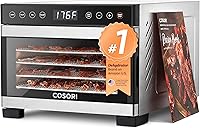
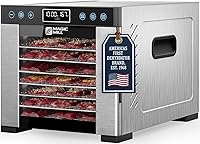
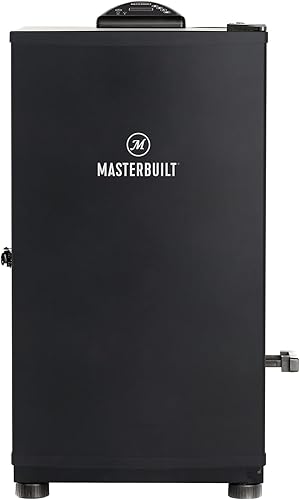
This dehydrator vs smoker for beef jerky comparison sets the Cosori 6-tray stainless steel dehydrator against the Masterbuilt 30-inch digital electric smoker. We compared their specs, controls and size, then looked at what each machine is made for.
 Best for a steady countertop jerky dryer
Cosori 6-Tray Stainless Steel
 Best for smoke flavor in the backyard
Masterbuilt 30-Inch Digital Electric Smoker
The specs side by side
The Masterbuilt weighs more than twice as much as the Cosori and stands more than twice as tall. The table sets cooking space, power and size next to each other.
| Product | Best for | Cooking space | Power | Size | Our score |
|---|---|---|---|---|---|
| Cosori 6-Tray Stainless Steel | a steady countertop jerky dryer | 6.5 sq ft, 6 trays | 600 W | 17.8 x 13.4 x 12.4 in | 8.9 |
| Masterbuilt 30-Inch Digital Electric Smoker | smoke flavor in the backyard | 710 sq in, 4 racks | Corded electric | 19.8 x 20.9 x 33.3 in | 7.8 |
The cooking space rows measure different things (tray area against rack area), so read them as a rough guide.
How a dehydrator and a smoker work on beef jerky
A dehydrator dries meat with warm air at a set temperature and adds no smoke. A smoker flavors meat with wood smoke and heat working together.
The Cosori has a 600 W motor and a rear-mounted drying fan that moves air across the trays. Cosori says the fan and its airflow design dry food more evenly without you turning the trays.
The Masterbuilt feeds a wood chip tray through a side loader, and Masterbuilt says that lets you add smoke without opening the door. It also has a removable water bowl for moisture and an air damper.
Dehydrator vs smoker: air drying or smoke flavor for jerky
Choose by the strip you want. A dry, chewy strip with no smoke points to the dehydrator, and smoke as the main goal points to the smoker.
With a dehydrator, your marinade and seasoning do all the flavor work. With a smoker, the wood chips add a layer on top of them.
If you're not sure a dehydrator can make jerky at all, start with can you make jerky in a dehydrator.
Size, weight and where each one sits
The Cosori fits on a countertop, and the Masterbuilt needs floor or patio space. The Cosori measures 17.8 inches deep, 13.4 inches wide and 12.4 inches tall, and it weighs 18.1 pounds.
The Masterbuilt measures 19.8 inches deep, 20.9 inches wide and 33.3 inches tall, and it weighs 45.9 pounds. Masterbuilt describes it as a backyard machine, which matches that size.
Check each manual for the clearance it asks for around the unit. Pick the spot before the box arrives, because 45.9 pounds is hard to move once it's set up.
Trays, racks and cooking space
The Cosori gives you 6 stainless steel trays with 6.5 sq ft of drying space. The Masterbuilt has four chrome-coated racks and about 710 square inches of cooking space.
Square feet and square inches are easy to mix up. The Cosori's 6.5 sq ft works out to about 936 square inches, but a dehydrator tray and a smoker rack are built for different food, so treat the comparison as rough.
How many jerky strips fit in one batch
Six trays let you spread a batch across several levels, one layer per tray. Leave a little space between strips so air reaches each one.
The Masterbuilt's four racks are sized for big cuts, and Masterbuilt says it fits up to 6 chickens, 2 turkeys, 4 pork butts or 4 racks of ribs. For a full step-by-step routine on the dehydrator side, see how to make jerky in a dehydrator.
Power, controls and temperature range
The Cosori runs from 95 to 165°F in 1°F steps with a timer of up to 48 hours, and the Masterbuilt goes up to 275°F. Both have digital controls for temperature and time.
Masterbuilt states only the top setting, so check the manual for its lowest setting before you plan jerky in it. For the drying temperatures used with beef jerky, see dehydrator temperature for beef jerky.
Cosori says its touch panel sets the temperature accurately to the degree. That 1°F control is handy when a recipe or your manual names an exact setting.
Both panels let you set a cook time, but only Cosori gives a range: up to 48 hours. Check the Masterbuilt manual for its longest timer if you plan a long batch.
What comes in each box
The box contents show how different the two jobs are. The Cosori comes with 6 stainless steel trays, a mesh screen, a fruit roll sheet, a user manual, a quick reference guide and a 50-recipe cookbook.
The Masterbuilt comes with four racks, a water bowl, a wood chip tray and loader, a drip pan, a grease tray and an air damper. It also includes two adjustable screw legs and a hardware pack.
The Cosori's mesh screen and fruit roll sheet suit small or sticky foods. The Masterbuilt's extras are about smoke, moisture and drips.
Prep and slicing before either machine
Slicing, seasoning and marinating happen before the meat goes in, so prep is the same for both machines. Thin, even slices dry faster and more evenly, so keep the thickness close across the whole batch.
Cut the strips with the grain or against it, as your recipe says. Pat off extra marinade so it doesn't drip onto the trays or racks.
Batch size, room humidity and the machine itself all change drying time. Your manual sets the exact settings for your unit.
What each machine asks of you on a jerky day
On a dehydrator day, you load the trays, set the temperature and timer, and let the Cosori run. Your main jobs are loading evenly and planning the timer around the batch.
On a smoker day, you also look after a water bowl and a wood chip supply. The side loader lets you add chips without opening the door, so gather the wood before the cook starts.
Cleaning and upkeep
The dehydrator is the lighter cleanup job on paper. Cosori says the 6 trays are dishwasher safe, while the Masterbuilt has a removable water bowl and a removable rear grease tray that need cleaning.
Plan the cleanup before you buy. Each manual covers the care steps for the housing and the control panel.
Noise and where you run each one
Cosori says its brushless motor runs below 48 dB, and Masterbuilt doesn't give a noise figure. If noise matters in your home, ask Masterbuilt before you buy.
The Cosori's timer goes up to 48 hours, so it may run in your kitchen for a long stretch. A smoker puts smoke into the air around it, so give it open space away from windows and vents.
What each one is built for
The Cosori is built for drying, and the Masterbuilt is built for smoking meat. The Cosori comes with a fruit roll sheet, a mesh screen and a 50-recipe cookbook, so fruit and vegetables can join jerky in your plan.
Masterbuilt describes the smoker for chicken, turkey, pork butts and ribs, and it says nothing about drying fruit or herbs. If a garden harvest is also on your list, the dehydrator is the clearer match.
For the features to check on any dehydrator, see how to choose a food dehydrator.
Warranty and what each maker covers
The Cosori carries a 2 year manufacturer warranty, and the Masterbuilt carries a 1 year warranty. Read each brand's full terms before you buy, since they set what counts as a claim.
Food safety applies to both machines
USDA's jerky guidance applies whichever machine you pick. USDA advises heating meat to 160°F before the drying step, checked with a food thermometer.
After that step, USDA says to hold the dehydrator at 130 to 140°F while it dries the meat. USDA also notes that a dehydrator on its own may not reach a temperature that kills bacteria, so keep a food thermometer handy.
Read USDA's jerky and food safety guidance for the full steps. Each maker's manual comes first for the settings on its own machine.
Five questions to answer before you buy
Your space, flavor goal, batch size, power supply and cleanup routine decide most of this choice. Check each one before you order.
- Space: Do you have counter room for an 18.1 pound unit, or floor and patio room for a 33.3 inch tall smoker?
- Flavor: Do you want a dry strip with no smoke, or wood smoke in the meat?
- Batch size: Will you dry trays of strips, or cook bigger cuts such as ribs and pork butts?
- Power: The Cosori runs on 120 volts, so check that an outlet and cord reach the spot you picked.
- Cleanup: Are you happy washing trays, or do you want fewer parts to rinse?
Who the dehydrator suits
The Cosori suits a cook who wants a countertop box for steady drying with a timer. It also fits someone who plans to dry fruit, herbs or vegetables as well as jerky.
- A home cook with counter space for an 18.1 pound unit.
- Someone who wants stainless steel trays and a timer of up to 48 hours.
- A jerky maker who also dries garden produce in the same machine.
Who the smoker suits
The Masterbuilt suits a backyard cook who wants wood smoke flavor and plans to cook meats beyond jerky. It fits someone who smokes ribs, pork butts or whole poultry and doesn't need a machine for fruit or herbs.
- A cook with outdoor space for a 33.3 inch tall unit.
- Someone who wants to add wood chips without opening the door.
- A buyer who is fine with a 1 year warranty.
Which one to buy: dehydrator vs smoker for beef jerky
Pick the dehydrator if you want a countertop machine for steady, dry jerky, and the smoker if smoke flavor and outdoor space matter more to you.
Our score weighs specs, features and buyer feedback against what you're shopping for. The smoker scores lower here because this search is about a jerky dryer, not about how well a smoker cooks.
- Pick the Cosori 6-tray if you want 6 stainless trays, a 95 to 165°F range and a 48-hour timer.
- Pick the Masterbuilt 30-inch if you want smoke flavor, have outdoor space and cook ribs or pork butts too.
If an oven is also on your list, dehydrator vs oven for beef jerky covers that trade-off. Our food dehydrators for jerky guide covers the features to check first, and best dehydrators for jerky compares more models.
The two machines also do different jobs, so owning both is a reasonable plan if you have the space. Browse all jerky dehydrator guides for more on drying jerky at home.
Frequently asked questions
Is a smoker better than a dehydrator for beef jerky?
Neither is better across the board, because they do different jobs: a smoker adds wood smoke flavor, while a dehydrator dries meat with steady, low heat on a countertop. Pick by the flavor you want and the space you have, and follow USDA's jerky guidance with either machine.
Can a Masterbuilt smoker make beef jerky?
Masterbuilt describes its 30-inch electric smoker for smoking meats, with digital controls that go up to 275°F, and it doesn't state a lowest setting. Check the manual for the low end and for any drying guidance before you try jerky, since a dehydrator is built for steady low heat.
What temperature does a dehydrator use for beef jerky?
USDA says to heat the meat to 160°F, checked with a food thermometer, then hold the dehydrator at 130 to 140°F while it dries the meat. The Cosori's 95 to 165°F range covers that drying step, but follow USDA and your own manual for the exact steps.
Which is easier to clean, a dehydrator or a smoker?
Cosori says its 6 trays are dishwasher safe, which keeps dehydrator cleanup simple. The Masterbuilt adds a removable water bowl and a removable rear grease tray to wash, so read each maker's cleaning steps in the manual before you buy either one.